
February Summit Recap: A Year of Impact and the Road Ahead
At February’s Transform Westside Summit, neighbors, partners, and supporters gathered to reflect on a year of meaningful progress — and to recommit to the work ahead.
WFF President & CEO John Ahmann and Jon Ingram, WFF’s Chief Development Officer opened the Summit by welcoming attendees, thanking the sponsors and supporters who make these monthly gatherings possible, and setting the tone for both reflection and forward momentum.
Tameka Bell, Director of Special Projects at Ebenezer Baptist Church and a proud Home on the Westside homeowner began the morning with a reflection on what it means to love your neighbor. Her devotion grounded the gathering in something deeper.
Four Different Stories, One Shared Street
Tameka purchased her home in 2023 with support from On the Rise and Home on the Westside. “It was more than an investment in property,” she shared. “It was an investment in possibility, in belonging, and in the future.”
She described her block — what she calls “the quad” — four homes, four different stories: a legacy resident of more than 40 years, a new homeowner, a local builder, and herself.
“We are neighbors not just in proximity, but neighbors in practice,” she said. “When we love our neighbors well… we stabilize more than property values. We stabilize hope. We stabilize belonging. And we stabilize the soul of a community.”
Her reflection set the framework for the morning: development must protect dignity. Growth must strengthen belonging. Love must be intentional.
A Decade of Restoration — Without Displacement
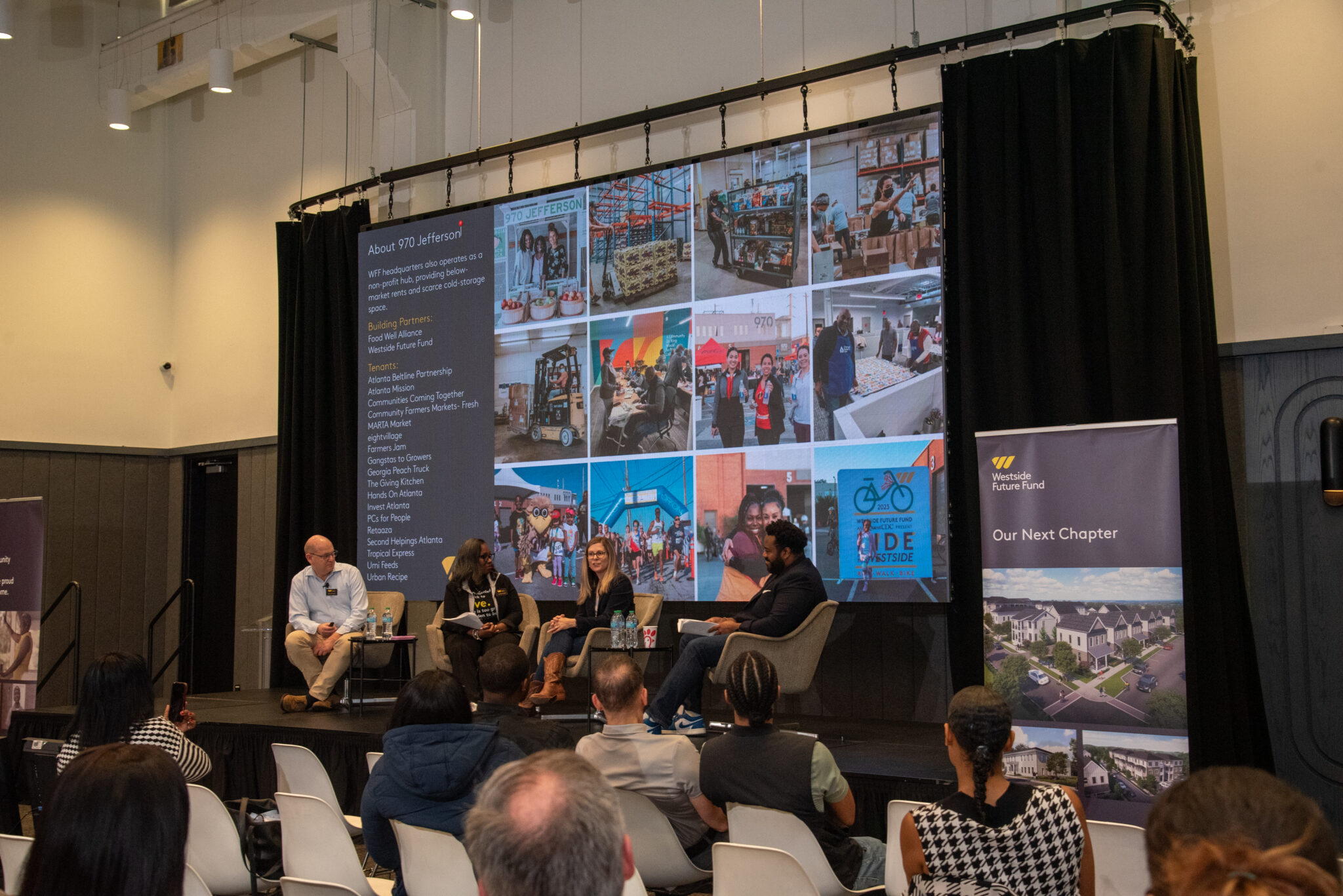
Following the devotion and moments of fellowship, the panel — moderated by John Ahmann and featuring Tameka Askew (Director of Home on the Westside), Rachel Carey (Chief Real Estate Officer), and Jon Ingram — walked attendees through the tangible progress of the Westside Future Fund.
When WFF launched just over a decade ago, the foundation of the work was clear: restoration without displacement.
As Atlanta’s historic Westside repopulates, the goal remains the same — welcome new neighbors while ensuring legacy residents can stay and those who were pushed out can return.
A short video overview highlighted WFF’s holistic impact areas:
- Mixed-income communities
- Cradle-to-career education
- Community health and wellness
- Safety and security
At the heart of it all is Home on the Westside — designed to ensure residents with deep ties to the community can stay and thrive.
2025 by the Numbers, and What’s Next
The panel shared some highlights from the past year, as well as a look forward towards what’s to come.
Real Estate & Housing
“When we first started with our program and buying up a lot of land, one of the questions from the community was: how are you going to prioritize who goes first?” recalled John Ahmann. The community retention guidelines for the Home on the Westside program are the answer. The program is designed to ensure residents with deep ties to the community, including those who live, work, or learn here, can stay and thrive.
“We’re not just putting people in homes, we’re setting you up to be successful,” said Tameka. If you’re not quite there yet, WFF will set you up with a financial coach to get you prepared for success.
WFF has invested over $27 million in property acquisition over eight years, with 25 single-family homes slated to become available just this year, along with dozens of rental units.
Rachel Carey emphasized the goal of mixed-income communities and proximity to public investment like Katherine Johnston Park and the Westside BeltLine Connector Trail — intentionally carving out affordability where market pressure is highest. In addition to keeping properties permanently affordable, down payment assistance is also available for many homebuyers.
Anti-Displacement Tax Fund
The Anti-Displacement Tax Fund, launched in 2017, is an answer to rising property values and rising taxes as a result. The program helps ensure legacy homeowners can remain in their homes. Program highlights for 2025 included:
- 116 participants
- $130,000+ in property taxes paid
- Five new legacy homeowners added
Volunteers & Community Impact
A thriving community of volunteers and corporate partners is critical to WFF’s success. In 2025 we saw:
- 1,115+ volunteers
- 61 volunteer events
- 132.5 tons of trash cleared
- 300+ youth supported through Holiday Wishes
- 235 households served at Thanksgiving
- 574 Ride for the Westside participants
The Fund Behind the Future
If we want affordability, we need philanthropy.
WFF’s Next Chapter Campaign seeks $55 million to sustain this work. In 2025 alone, nearly $9 million was raised from individuals and corporations across industries in service of this goal.
“I’m proud to ask people to support this mission,” said Ingram. “Without philanthropy, it would be impossible to keep these prices where they are and make it affordable for people to live in this community.”
Audience questions centered on permanent affordability and historic renovation — and the throughline remained clear: sustained investment makes restoration without displacement possible.
Building Entire Blocks That Feel Like the Quad
As fellowship continued after the panel, Tameka’s words lingered:
“What if the future of the Westside is about building entire blocks that feel like the quad? Four different stories, one shared street, one shared responsibility.”
February’s Summit was a reminder that what’s being built on the Westside isn’t just housing — it’s belonging.
And that work continues.