
September Summit Recap: Turning Workforce Conversations into Action on Atlanta’s historic Westside
At September’s Transform Westside Summit, community members, leaders and service providers came together to explore what it takes to create accessible pathways to meaningful employment and economic mobility for residents of the historic Westside.
Westside Future Fund (WFF) President & CEO John Ahmann and Chief Development Officer Jon Ingram welcomed attendees before a devotion from Brandon Teal, Associate Executive Director of the YMCA of Metro Atlanta and a Home on the Westside homeowner.
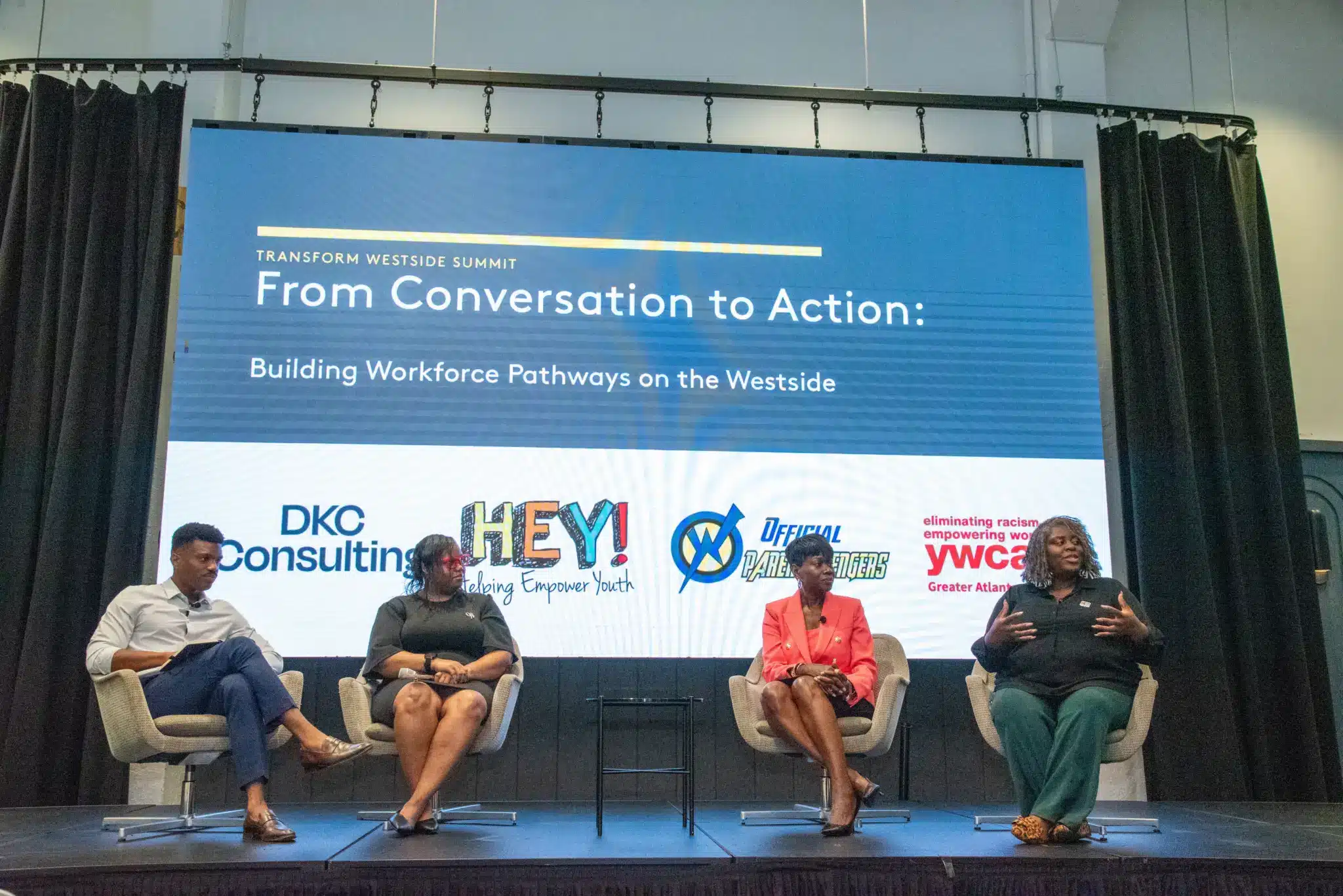
Following the devotion, attendees spent time in fellowship and heard an update on WFF’s Home on the Westside program before turning to the morning’s featured presentation, “From Conversation to Action: Building Workforce Pathways on the Westside.”
Rebuilding Together
Drawing from the story of Nehemiah, Teal reminded attendees that building a strong community is a shared responsibility.
“Let us rise up and build,” he said. “It is a call to rebuild relationships, restore hope, strengthen families, and create a community where everyone matters.”
Teal connected that message to his own experience becoming a homeowner through Home on the Westside and to the many roles neighbors, organizations, funders, and volunteers can play in strengthening Atlanta’s historic Westside. No one person or organization can rebuild the community alone, he explained. Everyone has a section of the wall to help build — and a responsibility to protect what the community creates together.
That call for shared action became a throughline for the panel discussion that followed.
Creating Stability Before a Pathway
Moderated by Darnell Cadette, Principal & Founder of DKC Consulting, the conversation featured Wykeisha Howe, Executive Director of Official Parent Avengers; Danita Knight, President & CEO of the YWCA of Greater Atlanta; and KaCey Venning, Executive Director of Helping Empower Youth (HEY!). Together, they explored the barriers residents face while navigating workforce systems and what organizations, funders, and community partners can do to create stronger pathways to stability and opportunity.
Cadette began by sharing lessons from a recent workforce convening organized by the Arthur M. Blank Family Foundation. Although Atlanta’s historic Westside is home to many committed service providers and valuable resources, their existence alone does not guarantee residents can find, access, and navigate them.
“Just the existence of resources doesn’t actually make pathways for our residents,” Cadette pointed out.
Panelists described the many challenges that can make it difficult for residents to pursue education, training, or employment. A person may be searching for a job while also facing housing instability, transportation barriers, food insecurity, or a lack of clean clothing and other necessities. Young adults — particularly those between 18 and 25 — can fall into gaps between youth and adult services while being told they should be able to manage on their own.
“When you’re constantly living in an emergency room state, it is hard to then prepare for the pathways and the pipelines,” Venning remarked.
At HEY!, workforce support can begin with laundry, toiletries, transportation, or a safe place to take a shower. These services may not look like traditional workforce development, but they give young people the stability and dignity needed to prepare for an interview, complete training, or remain employed.
“I can’t give you outcomes if we’re not taking care of the human condition,” Venning said.
Knight echoed that point, cautioning against assumptions about people who need assistance. “They are not individuals who are not worthy,” she said. “They are just individuals where circumstances have happened… More than anything, they need support and empowerment.”
Panelists also emphasized beginning this work early. They encouraged organizations and employers to expose young people to workplaces, professional networks, travel, mentorship, and other experiences that allow them to imagine new possibilities.
“When they can see themselves differently, they’ll begin to feel differently,” Venning explained.
Making Resources Easier to Reach
Throughout the discussion, panelists returned to the need for stronger coordination among organizations.
Families are often asked to search for services themselves, repeat their stories to multiple providers, or follow referrals that lead to another dead end. Howe called for more peer navigators — people who know the community, understand families’ circumstances, and will stay involved beyond the initial referral.
Panelists described a better approach built around “warm handoffs.” Instead of simply giving someone a phone number, one organization should be able to contact another trusted provider directly, explain the need, and help ensure the resident receives support.
That kind of collaboration is central to the returning Phyllis Wheatley Westside YWCA, expected to reopen in early 2027. Knight shared that the YWCA began planning by holding social circles with Westside women and asking what they wanted from the building and its programs. Their input is shaping a model focused on advocacy, education and economic empowerment, and health and wellness, supported by partnerships with organizations including the YMCA of Metro Atlanta, Morehouse School of Medicine, CHRIS 180, and Families First.
Listening, Trusting, Acting
When Cadette asked what must change to turn collaboration into action, the panelists’ answers were candid: listen to residents, trust organizations doing the work, fund the less-visible services families need, and reduce unnecessary barriers.
Panelists also challenged funders and institutions to provide community-based organizations with the flexibility to respond to real needs in real time. That requires accountability, but it also requires trusting leaders whose knowledge comes from their relationships and lived experience within the community.
Looking ahead, the group envisioned a community where more residents are stable, young adults receive concrete support, displaced families can return, longtime residents can age in place, and anyone seeking assistance can quickly identify where to go — and know they will be served well when they arrive.
The morning ended as it began: with a reminder that transformation is collective work. Stronger workforce pathways will not be built by one program, funder, or organization. They will be built by listening to residents, caring for the whole person, coordinating resources, and moving together from conversation to action.
Missed the event? Watch the full September Transform Westside Summit on YouTube.
