
July Summit Recap: From Investment to Impact — What the Mayor’s NRI Means for the Westside
At July’s Transform Westside Summit, neighbors, partners, and community leaders gathered to explore what meaningful neighborhood investment should look like — and how Atlanta can direct new resources toward historically underserved communities while ensuring longtime residents remain at the center of that progress.
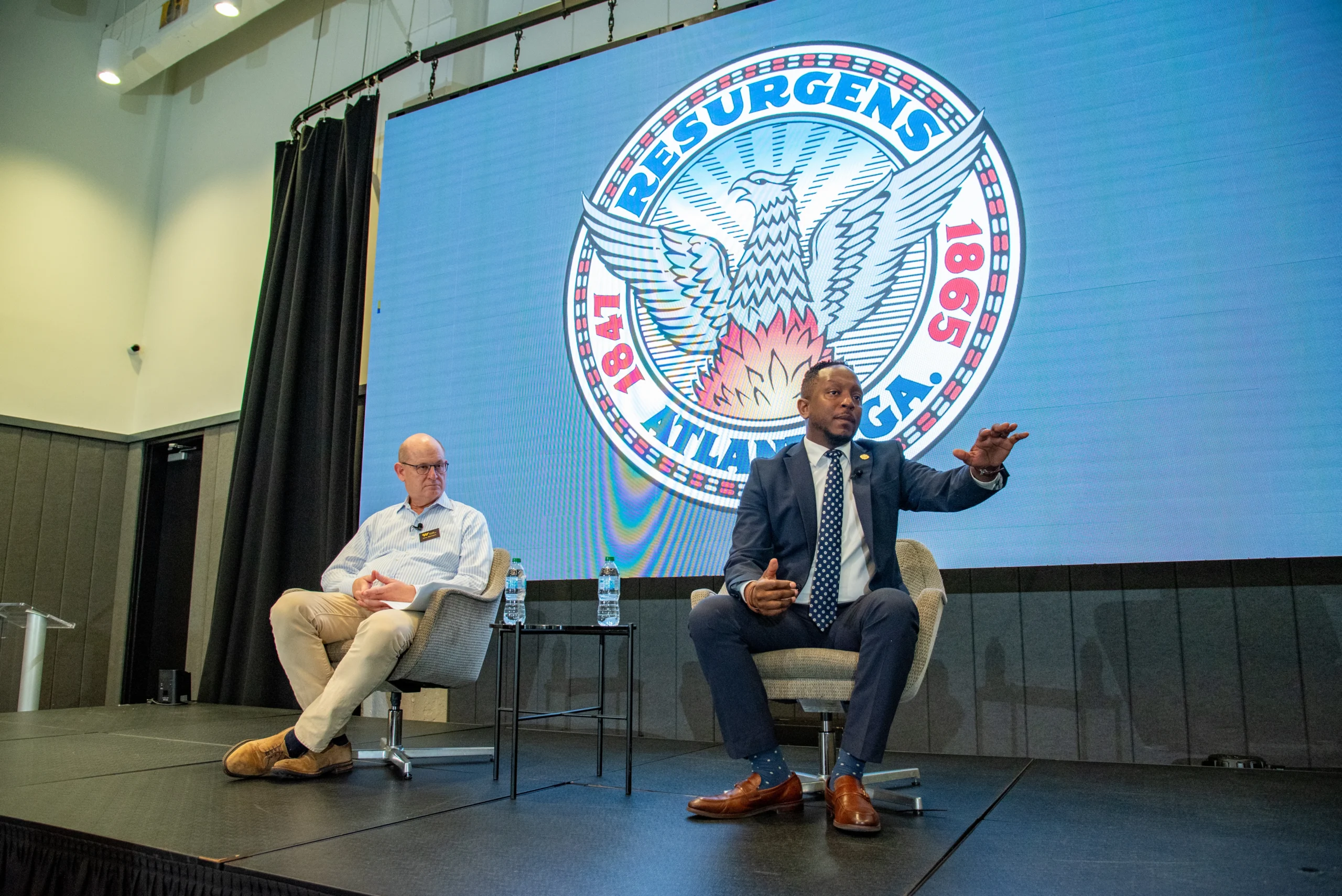
Hosted by Westside Future Fund President & CEO John Ahmann, the morning began with a devotion from Home on the Westside homeowner Jaylyn Maddox, followed by an update on WFF’s available homes and homebuyer resources. The Summit then moved into the featured presentation, “From Investment to Impact: What the Mayor’s NRI Means for the Westside,” with City of Atlanta Chief of Staff Courtney English.
Throughout the morning, one message remained clear: investment should be measured not only by what gets built, but by whether residents can remain, thrive, and benefit as their neighborhoods grow.
Bringing Resources Back to the Community
July’s devotion was led by Jaylyn Maddox, a father, entrepreneur, technologist, community builder, and Home on the Westside homeowner with deep roots in the community.
Maddox grew up on the Westside and returned to make his home on Sunset Avenue in English Avenue. He closed on his newly constructed home in May 2025, creating a safe and stable place for himself and his young daughter.
Becoming a father, he shared, made him more intentional about the work he does, the relationships he builds, and the impact he hopes to leave behind. Having a home where his daughter can safely play and grow gives him hope for her future — but he also recognizes that housing is only one piece of what families need to thrive.
“Awareness about the resources is the biggest key,” Maddox said.
Opportunities may exist in housing, education, technology, and the workforce, but their impact is limited if residents do not know those resources are available or understand how to access them.
Drawing a connection between his professional experience and his commitment to the Westside, Maddox spoke about the importance of bringing knowledge, resources, and economic opportunity back into the community. As residents advance in their careers and gain new skills, he encouraged them to consider how those assets can help create jobs, mentor young people, and build solutions within the neighborhoods that shaped them.
Maddox described this commitment simply: “We call it heart work — because you don’t necessarily make a profit off of it, but you know you make an impact and that’s what lasts generations.”
Closing Atlanta’s “Tale of Two Cities”
The morning’s featured conversation welcomed Courtney English, Chief of Staff for the City of Atlanta, for a discussion about Mayor Andre Dickens’ Neighborhood Reinvestment Initiative (NRI).
English explained that the mayor’s broader goal is to make Atlanta the best place in the country to raise a child. Reaching that goal requires healthy, connected, and safe neighborhoods where families have access to housing, healthcare, transportation, education, jobs, fresh food, and economic opportunity.
Today, however, that access is not evenly distributed.
English described a “tale of two cities,” with residents experiencing dramatically different outcomes depending on where they live. He pointed to a 20-year life-expectancy gap between Atlanta neighborhoods separated by only seven miles — a disparity shaped by generations of intentional policy and disinvestment.
“A city cannot thrive if we concentrate opportunity in one place,” English said.
The Neighborhood Reinvestment Initiative is designed to help close that gap by directing resources toward historically underserved communities. “[The NRI] is designed to ensure residents — that for far too long have gone without — have everything they need to thrive in the city of Atlanta as Atlanta continues to grow,” explained English.
Turning Community Priorities Into Action
After approximately two and a half years of community engagement, Atlanta City Council approved the Neighborhood Reinvestment Initiative earlier this summer. The City of Atlanta is continuing to work with Atlanta Public Schools and Fulton County on participation in one of the initiative’s primary funding tools.
The project list behind the initiative draws from years of neighborhood plans and community conversations. As English noted, many communities have already told the city what they need. Residents have repeatedly asked for affordable housing, better jobs, paved roads, repaired sidewalks, improved lighting, safer neighborhoods, parks, trails, green space, and access to fresh food.
The work now is to turn those priorities into action.
As the initiative moves forward, English said residents can expect to see accelerated work around affordable housing, municipal grocery stores, neighborhood infrastructure, and protections against displacement. English emphasized the need to listen to residents, respond to what they have requested, and act with urgency.
Making Sure Residents Can Stay
That urgency is especially important as investment and development bring new attention to neighborhoods across Atlanta.
“It does us no good to redevelop a community, to bring amenities to a community, if the folks who were there before can’t afford to stay there,” he said.
Anti-displacement protections are therefore a central part of the Neighborhood Reinvestment Initiative. English highlighted the expansion of Atlanta’s Anti-Displacement Tax Fund, which will freeze property taxes for 455 eligible homeowners for 20 years. Additional funding will be needed to expand the program and extend its impact to more residents over time.
The initiative also proposes a broader way of evaluating neighborhood investment. Traditionally, the success of tax allocation districts and similar development tools has often been measured through the number of housing units built, businesses attracted, or dollars invested.
English argued that those measurements are incomplete if they do not show what happened to the people living in the community.
“We don’t want to just measure our success based on how many units we create,” he said. “We want to measure our success based on how many lives we save.”
New measures will look at whether neighborhoods are becoming safer, whether legacy residents and businesses can remain, whether evictions and student mobility decline, and whether families gain better access to fresh food and other essentials.
By tying investment to the lives of residents, the initiative seeks to make accountability more community-centered and more reflective of what neighborhood progress should truly accomplish.
Ensuring Community Voice Shapes What Comes Next
Community participation will continue through neighborhood working groups held across the areas included in the initiative.
WFF serves as the City of Atlanta’s neighborhood partner organization for English Avenue and Vine City, convening a working group on the fourth Monday of each month at 970 Jefferson Street. Similar working groups serve Grove Park and neighborhoods along the West Hollowell corridor.
These gatherings give residents an opportunity to speak directly with City of Atlanta leaders, identify priorities, and help shape the projects pursued through the initiative. Rather than beginning another planning process from scratch, the working groups are drawing from years of resident feedback and existing community plans.
The goal is to ensure that decisions about neighborhood investment are informed by the people who experience those neighborhoods every day. English acknowledged that government has not always gotten this work right and emphasized the importance of remaining available and responsive.
“This work has to be done with people and not to people,” he said.
Measuring What Matters
July’s Summit was a reminder that investment alone is not the finish line.
The true measure of progress is whether longtime residents can remain in their neighborhoods, families can build lasting stability, young people can access opportunity, and community members can help shape what comes next.
Jaylyn Maddox’s commitment to bringing his skills and resources back to the Westside demonstrated what reinvestment can look like at the individual level. Courtney English discussed the importance of bringing that same responsibility to the city level, emphasizing that public resources must be directed intentionally, measured honestly, and guided by the people most affected.
Correcting generations of inequity will require sustained investment, urgency, transparency, and a willingness to listen. It will also require keeping people — not simply projects — at the center of the work.
Missed the event? Watch the full July Transform Westside Summit on YouTube.