
June Summit Recap: District 3 In Motion
Community members gathered at the June Transform Westside Summit for a morning of reflection, conversation, and connection.
Hosted by Westside Future Fund President & CEO John Ahmann, the Summit brought together residents, community leaders, nonprofit partners, business owners, and advocates on a day that carried special significance. Held on Juneteenth, the gathering explored not only the history and meaning of freedom, but also what it takes to build a future where longtime residents can continue to thrive on Atlanta’s historic Westside.
Throughout the morning, conversations returned to a shared theme: ensuring that investment, opportunity, and progress strengthen the community without leaving behind the people who have called it home for generations.
Honoring Juneteenth
The Summit opened with a Juneteenth reflection led by Rodney Bullard, President & CEO of The Same House, and founding Board Member of Westside Future Fund who was critical to the launch of WFF.
Through a historical look at the events leading up to June 19, 1865, Bullard reminded attendees that freedom was not delivered all at once. Instead, it arrived through a series of hard-fought steps, carried forward by people committed to creating a better future for those who would come after them.
“At the end of the day, we know that freedom has been proclaimed, but we can walk around neighborhoods like the Westside and know there is work to be done… That’s the work for each one of us, personally. That’s the work for us to rebuild the wall. It looks like workforce development. It looks like affordable housing. It looks like ensuring that we have a safe community to live in. It looks like the Westside that we want and aspire towards. At the end of the day, freedom has been announced, but freedom must be built. And I’m so very glad to stand shoulder to shoulder with you as we build this wall,” Rodney proclaimed.
His remarks set the tone for the morning’s conversations, encouraging attendees to think not only about the history of freedom, but also about the responsibility communities share in creating opportunity, removing barriers, and ensuring that residents can continue to thrive where they live.
Creativity as a Pathway to Opportunity
Following the Juneteenth reflection, attendees were treated to a special Juneteenth celebratory performance from young people participating in Music Without Limits (MWL), a program that uses music and creative expression to support youth development.
Before the students took the stage, Destiny Motley, Instructional Writer and Program Manager for MWL, shared how the organization helps young people develop life skills alongside artistic talents. Destiny explained that the curriculum focuses on communication, emotional awareness, conflict resolution, self-expression, and personal responsibility.
The students’ performances brought energy, creativity, and inspiration to the Summit, offering a powerful reminder that investing in the future also means investing in young people today.
Featured Presentation: District 3 in Motion
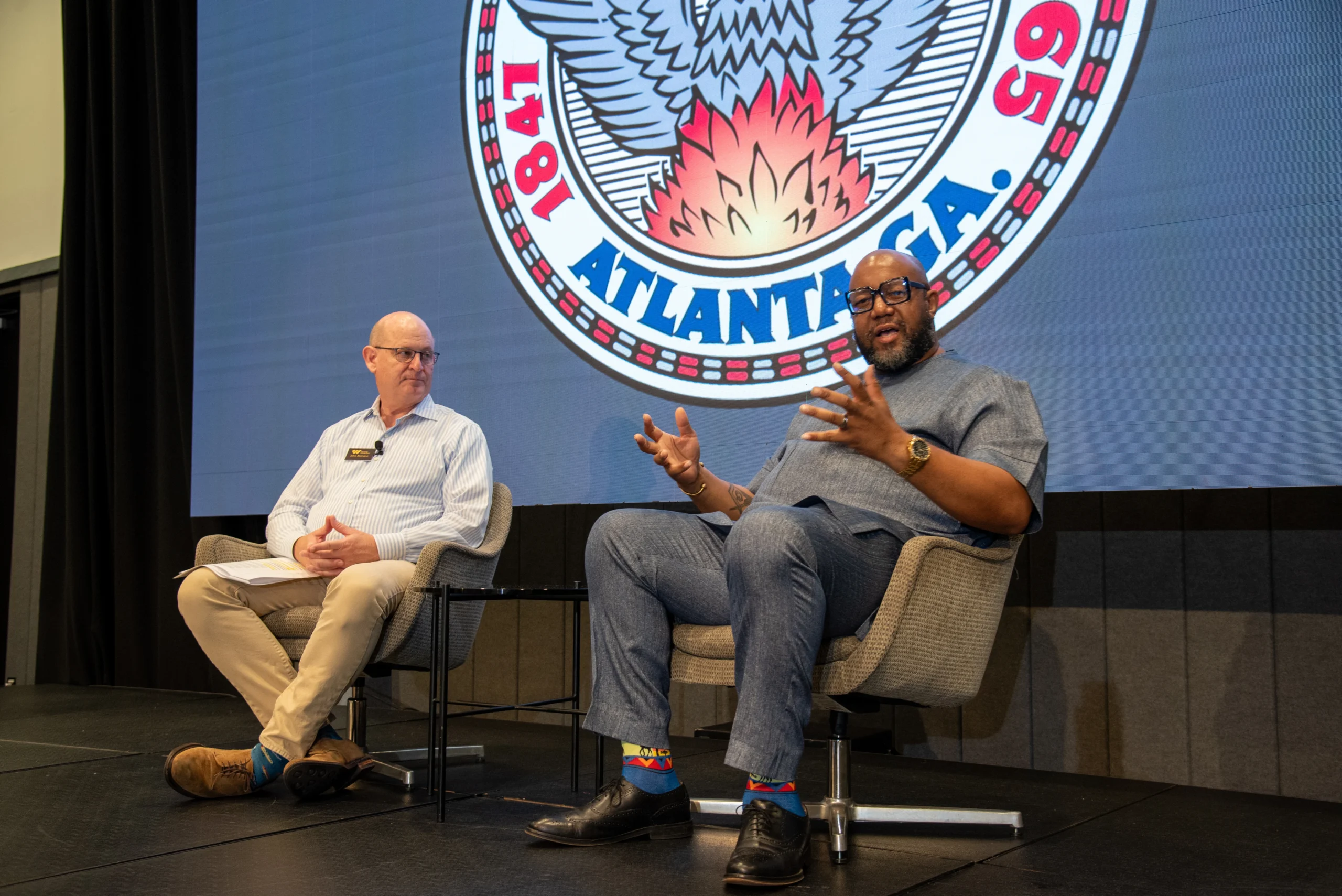
The featured presentation of the morning, District 3 in Motion: City Updates, Community Priorities, and the Future of the Westside, was led by Atlanta City Councilmember Byron Amos in conversation with John Ahmann.
Drawing on his experience as a lifelong Westside advocate and public servant, Amos discussed the opportunities and challenges facing the community as investment continues throughout District 3. Topics ranged from infrastructure improvements and zoning to affordable housing, neighborhood preservation, economic development, and support for senior residents.
“I was blessed with the curse to serve,” Amos said when reflecting on his motivation for public service.
Throughout the conversation, Amos emphasized that meaningful progress requires collaboration and a willingness to focus on people as much as projects.
“The community is beginning to realize we have to do something different with our people before we can do something different with our dirt,” he said to applause. “That’s one of the biggest reasons why I supported the TAD extension and I supported the Neighborhood Reinvestment Initiative. The truth is everyone said it right: TADs were not designed to help people. They’re not designed to do that. They’re designed to build buildings. But we finally figured out that we need that neighborhood reinvestment piece to help the people.”
Amos also highlighted the importance of leveraging public investment in ways that create benefits beyond a project’s immediate footprint. He discussed how infrastructure improvements, economic development, and successful local businesses can create ripple effects that strengthen surrounding neighborhoods and expand opportunities across the Westside.
“We’re beginning to realize our biggest tools are the resiliency of our neighbors and our friends,” Amos remarked.
He repeatedly returned to the idea that the Westside’s future depends on collective action.
“We have a lot of work to do, and we have to do it together because this is really an all hands on deck type moment,” Amos said. “It is time for all of our businesses to work together. It is time for our clergy to come together. It is time for our developers to work together. It is time for us to identify the issues we know we have — don’t dwell on the issues, but finally start talking about the real solutions that will help the people on the ground.”
The conversation also addressed the pressures facing many longtime homeowners, particularly senior residents navigating rising property taxes and access to resources. Amos discussed ongoing efforts to connect residents with tax relief programs, legal assistance, and other support designed to help legacy residents remain in their homes.
A Community Conversation About Legacy Residents
As the presentation transitioned into audience questions, attendees raised concerns that reflected both hope and urgency for the future of the Westside.
One audience member posed a question that captured a concern shared by many throughout the morning:
“What’s our role as neighbors to make sure that the current legacy neighbors who have been here the most before can stay in their homes? How can we participate in that?”
The question sparked a broader conversation about affordability, homeownership, property taxes, and the role neighbors can play in supporting one another as investment continues across Atlanta’s historic Westside.
Throughout the discussion, attendees repeatedly returned to the idea that successful community development must address both the physical and human needs of a neighborhood. Investments in housing, infrastructure, and economic development matter, but so do the resources and relationships that help people remain healthy, stable, and connected to their community.
Looking Ahead
As the June Transform Westside Summit concluded, attendees left with an understanding that the future of Atlanta’s historic Westside will be shaped by more than development projects, infrastructure investments, or new construction.
It will be shaped by the decisions communities make about who benefits from that progress.
On a day dedicated to reflecting on freedom, the conversation served as a powerful reminder that preserving opportunity requires intentional action. Whether discussing affordable housing, supporting seniors, investing in young people, or strengthening neighborhood connections, the message throughout the morning was clear: the strongest future for the Westside is one that includes the people who have helped build it.
Missed the event? Watch the full June Transform Westside Summit on YouTube.