
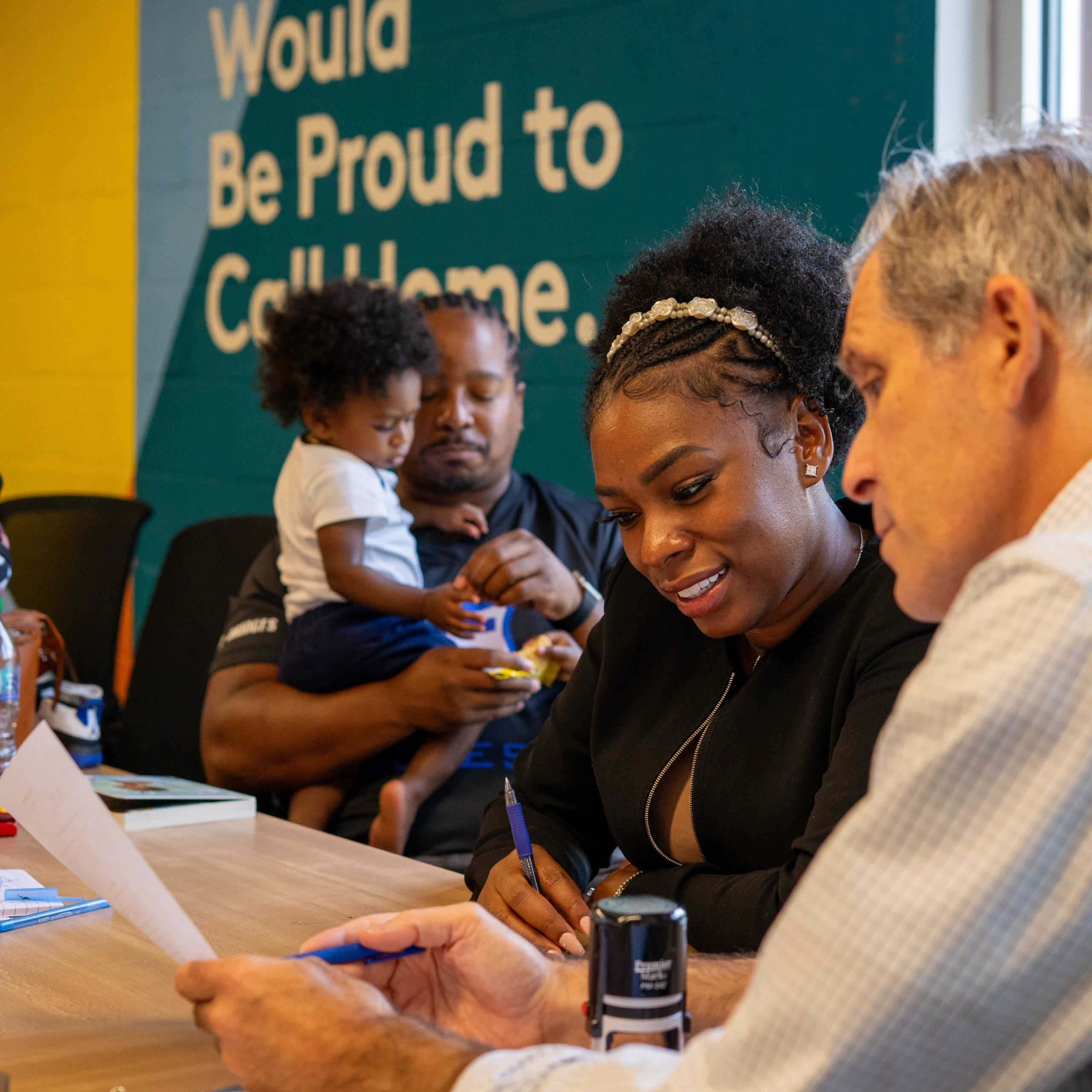
Meet the Coach Helping Westside Neighbors Become Homeowners
For a lot of people, the hardest part of buying a home isn’t finding the right house. It’s figuring out where to start — how to read a credit report, what lenders are actually looking for, how to build savings on a real-world budget. Westside Future Fund’s Home on the Westside program exists to make that path clearer for the historic Westside neighbors it serves, and one of its most valuable resources isn’t a listing or a check. It’s a coach.
Through a partnership with Operation HOPE, Home on the Westside connects residents with one-on-one financial coaching at no cost to them. The goal is simple: give people the tools, the plan, and the support to become homeowners — and to stay homeowners for the long haul.
Meet Mercedes Settles
Mercedes Settles is the Operation HOPE financial coach working with Westside residents. She spent more than 24 years in the mortgage industry before moving into coaching, which means when she sits down to review a credit report or walk through a lender’s requirements, she’s talking from experience on both sides of the table.
“I try to meet people where they are,” Mercedes says. “The first meeting is just a conversation. I want to know what brought you here, what your goal is, what your timeline looks like. And I tell people up front — I’m not here to judge you or beat you up about anything in the past.”
No Cost — and No Catch
Mercedes is careful about how she describes the program. “I say our services are at no cost to the client — not that they’re free — because someone is paying for it.” That “someone” is a network of corporate and philanthropic partners whose support makes the coaching available to residents who need it.
For residents who’ve been burned by predatory credit repair companies — the kind that charge hundreds of dollars a month for promises that never pan out — hearing that this coaching costs them nothing tends to be the moment they start to trust the process.
What the Coaching Covers
Coaching through Home on the Westside isn’t a workshop or a one-time class. It’s an ongoing relationship, mostly virtual, built around each resident’s schedule and situation. Typical work includes:
- Credit review. Mercedes pulls reports from all three bureaus and walks through them on a shared screen — not just to flag problems, but to teach residents how to read their own credit and use it.
- Budget building. Every participant gets a personalized budget that reflects their actual life — family size, seasonal costs, the realities of today’s economy. A savings line is built in from day one, even if it starts at $5 a month. “We’re building the habit,” Mercedes says.
- Home-buying education. For residents working toward a purchase, Mercedes walks through pre-approval, what lenders look for, down payment assistance options, insurance, and the difference between needs and wants. She also prepares people for life after closing — maintenance, emergency savings, and what it means to be the one responsible when something breaks.
- Ongoing support. Coaching doesn’t end at closing. Mercedes stays in touch with residents after they buy, helping them plan for what’s next — and, drawing on her lending background, watching for the early signs of trouble so foreclosure never becomes a possibility.
Built for the Long Run
Not everyone who comes to Operation HOPE is trying to buy a house. Some are existing homeowners rebuilding their credit. Some just want a better handle on their money. Mercedes coaches all of them.
“Saving, living within your means, budgeting, planning for future goals — those things matter regardless of where you are,” she says. One of the habits she works hardest to instill: anytime extra money comes in — a birthday gift, a bonus, a tax refund — a portion goes to savings, a portion to debt if there is any, and something to yourself. “Once that becomes your instinct, you’re building real stability.”
What It Looks Like in Practice: An Anonymous Case Study on the Westside
One Westside resident found Operation HOPE through social media. He was living in his parents’ basement, working as an independent contractor doing club security, with a credit score in the low 500s and about $1,000 in savings. He wanted to buy a home but didn’t think it was realistic. He hadn’t heard of Westside Future Fund either — Mercedes made that connection.
Six months later, he’d paid off his collections, raised his credit score to 720, and saved $15,000. Not long after that, he closed on a home through Home on the Westside in the same neighborhood he’d been trying to find his footing in.
“He used to take his coaching calls standing outside the club,” Mercedes recalls. “He was not going to miss a meeting.” When she pulled the six-month credit refresh and told him his score, he didn’t believe it at first. “I said, ‘You’re looking at it.’ He cried. He almost got me, too.”
People in his life had told him it wasn’t possible. The work he put in, with Mercedes and the Westside Future Fund team alongside him, proved otherwise.
Get Started
If you have a live, work, or learn connection to Atlanta’s historic Westside — such as being a current or former resident, an employee of a local business, or a current or former student or staff member at the Atlanta University Center or Booker T. Washington cluster school — you may be eligible for Home on the Westside, including financial coaching through Operation HOPE.
Learn more and take the first step at westsidefuturefund.org/homeonthewestside.