Finding Home on the Westside: The Story of Fernando Esquivel-Suarez

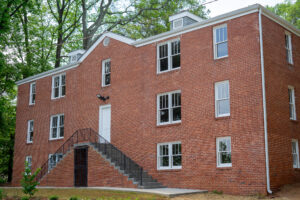
Fernando Esquivel-Suarez arrived in Atlanta from Colombia two decades ago, never expecting the city to become his “forever home.” Today, he’s a dedicated Professor of English and Ethnic Studies at Spelman College, a role he’s held for 13 years. 

His journey to Atlanta began with his pursuit of Master’s and Ph.D. degrees at Emory University, but it was his job at Spelman that ultimately rooted him in the city. Being a Spelman faculty member also allowed him to find his home through Westside Future Fund’s signature program – Home on the Westside.

“I learned about the program because I received an email [at work],” Fernando recalled. “I attended a meeting [with Westside Future Fund], and they explained very thoroughly what the program was and how it could benefit Spelman employees.”

A first-time homeowner, Fernando has deeply enjoyed his new home since moving in a year and a half ago. Like many Atlantan renters, he’d had many stays across the city, including residences in Buckhead, Druid Hills, Virginia-Highlands, Edgewood, and the West End. The Westside, he’s discovered, offers the most convenience, especially as he’s just minutes from his workplace and other ease-of-access amenities.

From the start of his home search to finding his current residence, the process took just six months. 

“One of the greatest advantages of this program is the down payment. It’s an amount that would be difficult for some folks to have all at once, particularly those in very relevant, socially relevant professions like academia that don’t have a very high income. They were very diligently putting together grants and making sure I had a very substantial down payment to help me with the mortgage.”

With the help of Westside Future Fund, Fernando was able to receive approximately $100,000 in grants to secure his down payment. Now, he’s the proud owner of a three bedroom, two bathroom home in English Avenue — a community he hopes to stay in for years to come.

Learn more about how you can find your Home on the Westside at www.homeonthewestside.com

Letters from Leadership: Keeping the Promise of the Westside — Why the Westside TAD Matters

Early in July, the Fulton County Commission considered withdrawing from the Westside Tax Allocation District (TAD) — a move that would disrupt deeply affordable housing developments already underway in neighborhoods that played defining roles in the Civil Rights Movement.

As I shared with the Commission, I live in Vine City. Every day, I see what coordinated public investment has made possible: new high-quality and affordable homes, safer streets, and legacy residents able to stay in place despite rising property values. These neighborhoods endured decades of systematic disinvestment. The Westside TAD has been one of the few tools powerful enough to help reverse that trend.

Working alongside partners like Invest Atlanta, Atlanta Housing, and Quest Community Development Corporation, Westside Future Fund has leveraged over $6 million in Westside TAD commitments to finance more than $37 million in development — a 6-to-1 return that has created nearly 400 affordable housing units and served hundreds of families. This isn’t just about numbers; it’s about the people who can now remain in the communities they love and have called home for generations.

These transformative investments include:

  • Major historic restorations like 220 Sunset Avenue — the childhood home of Mayor Maynard Jackson Jr. — and the English Avenue Yellow Store, preserving landmarks central to the community’s story.
  • Mixed-use developments delivering high-quality, deeply affordable multifamily housing paired with commercial spaces to bring essential retail and services to long-disinvested corridors.
  • Permanently affordable single-family homes that create pathways to homeownership and generational wealth-building for historic Westside families.

The voices raised at the July Fulton County Commissioners meeting were compelling. Pastor Kenny Alexander of Antioch Baptist Church North — one of our neighborhood’s oldest institutions at 148 years — spoke powerfully about the progress finally taking hold. Leonard Watkins, representing the neighborhood planning unit, captured the frustration of communities that have waited generations for this investment. Their words were a powerful reminder that the TAD is a lifeline for communities working hard to reclaim their future.

Thanks to these community advocates, civic leaders, and city partners like Courtney English, Chief Policy Officer and Senior Advisor to Mayor Andre Dickens, and Dr. Eloisa Klementich, President & CEO of Invest Atlanta, the Fulton County Commission unanimously voted to place the resolution on hold. This pause gives us the opportunity to continue building understanding about what’s at stake — and how we can work together to sustain this progress.

At Westside Future Fund, our mission is to help make the historic Westside “a community Dr. King would be proud to call home.” The Westside TAD is a critical tool in that broader effort. It is helping to deliver deeply affordable housing, preserve legacy residency, and ensure these historic neighborhoods have a vibrant future.

We are grateful for the thoughtful deliberation of the commissioners and the unwavering advocacy of our community partners. The work continues — and together, we can ensure that the promise of the historic Westside is kept for generations to come.

John Ahmann
President & CEO
Westside Future Fund

Volunteer Spotlight: Andi Shen & Love Atlanta

Andi Shen, a longtime volunteer and current partner leader with Love Atlanta, has played a key role in the organization’s impact on the historic Westside this year. Though it was her first year working directly with Westside Future Fund, Andi has been volunteering with Love Atlanta for nine years, helping to organize volunteers across the city to perform acts of kindness and community service. 

Founded by Passion City Church, Love Atlanta is built around the idea of spreading love through service. As a partner leader, Andi acts as a liaison between Passion City Church and partners across the city. She works closely with organizations to organize project details, coordinate volunteers, and ensure the necessary resources are available for a successful day of service. 

“The best way to support our partners is to volunteer and be the hands and feet of what they are doing for the city,” Andi remarks.

This spring and summer, Love Atlanta partnered with Westside Future Fund to complete three volunteer projects in the neighborhood: a bingo night at the community center, a beautification project at Katherine Johnson Memorial Park, and a large-scale street cleanup. 

For Andi, partnering with Westside Future Fund was especially meaningful because it extended Love Atlanta’s reach into an area of the city they’ve been eager to support.

“Most of our partners are located in areas like Buckhead, Brookhaven, or Midtown,” she explained. “It’s important for us to serve all parts of Atlanta, and Westside Future Fund gives us a great opportunity to do that.”

The mission of Love Atlanta — “to love on Atlanta,” as Andi puts it — was clearly in action through these volunteer efforts. Andi’s leadership behind the scenes helped ensure everything ran smoothly, and her passion for giving people purpose through service continues to fuel powerful community partnerships. 

To learn more about volunteer opportunities and to see how you can get involved, visit https://www.westsidefuturefund.org/volunteer

July Summit Recap: Justice Where It Matters – Advancing Neighborhood-Based Legal Empowerment

The July 18 Transform Westside Summit focused on the intersection of housing, justice, and community well-being, spotlighting the vital work of the Atlanta Volunteer Lawyers Foundation (AVLF) in creating systems-level change across Atlanta through pro bono legal and social services. Hosted and moderated by Westside Future Fund President & CEO John Ahmann, the Summit highlighted how historical systemic disinvestment continues to shape present-day eviction patterns, the impact of housing on educational and health outcomes, and the power of place-based legal interventions to restore safety, stability, and opportunity for families across Atlanta. 

The event opened with a devotion by Michael Cortez, a data research analyst with Morehouse Innovation & Entrepreneurship Center and Home on the Westside participant, who emphasized the strength of shared purpose, resilience through adversity, and the importance of every individual’s role in community transformation.

Following the devotion, AVLF Executive Director Michael Lucas took the stage to share AVLF’s evolving model of neighborhood-based legal advocacy, which embeds lawyers and social workers directly into Atlanta schools and communities. His message centered on how housing instability and eviction undermine education, health, and long-term opportunity for families.

Key highlights from Lucas’s presentation included:

  • Eviction Mapping and Redlining: Lucas shared compelling maps showing that evictions in Atlanta are still highly concentrated in formerly redlined neighborhoods — a painful legacy of discriminatory housing policy that continues to shape life outcomes today.

  • School Stability as a Justice Issue: High eviction rates force mid-year student relocations, which drastically reduce academic performance and graduation rates. AVLF’s work through their Standing with Our Neighbors program led to a 25% drop in school exits in communities.

  • Health Partnerships: Through collaborations with healthcare providers like Kaiser Permanente and Caresource, AVLF is addressing housing as a health issue — connecting families to legal resources that reduce exposure to unsafe housing, intimate partner abuse, and other social determinants of poor health.

  • Mobile Legal Access: Lucas shared the impact of AVLF’s Standing with Survivors program, equipped with a Mobile Advocacy Van outfitted to serve as a traveling courtroom. This will enable survivors of intimate partner violence to access legal protection safely from within their neighborhoods.

Throughout the presentation, Lucas emphasized that true justice requires meeting people where they are — geographically, emotionally, and structurally, saying: “We’re not waiting for families to come downtown to seek help. We’re bringing help to their front doors.”

Lucas closed by reflecting on AVLF’s move to a new headquarters, which is intentionally situated within the historic Westside to better serve the community. He also issued a call for increased public- and private-sector investment, noting that charitable support makes nearly half of AVLF’s work possible.

Missed the event? Watch the full Transform Westside Summit on YouTube.

A New Chapter in English Avenue: CJ Williams Becomes a First-Time Homeowner Through Home on the Westside

Westside Future Fund (WFF) is proud to celebrate a new beginning for CJ Williams, the latest first-time homebuyer to close on a home through our Home on the Westside program.

A dedicated Atlanta Public Schools teacher and staff member at the Atlanta Trap Music Museum, CJ is now the proud owner of a three-bedroom, two-bathroom home in English Avenue — a neighborhood rich with history and on the rise thanks to intentional investments and community-rooted progress.

CJ’s journey to homeownership reflects the promise of Home on the Westside and the power of partnership. With more than $120,000 in down payment assistance from five sources — including $60,000 from Westside Future Fund — CJ was able to purchase a home in the community he serves and loves.

Along the way, CJ also participated in financial education courses offered through WFF’s partnership with Operation HOPE. These courses provided tools and guidance that helped him strengthen his financial foundation and prepare for homeownership with confidence.

With keys in hand and his future rooted in English Avenue, CJ joins a growing number of legacy residents and those with deep ties to the community choosing to stay and thrive in Atlanta’s historic Westside.

Learn more about Home on the Westside at www.homeonthewestside.com 

Groundwork for Change: How Integrity Home Solutions Powers Property Care, Youth Leadership, and Volunteer Impact on the Historic Westside

When it comes to revitalizing Atlanta’s historic Westside, transformation doesn’t just happen — it’s built, block by block, by those willing to roll up their sleeves and do the work. For Westside Future Fund, that work is made possible every day by a trusted partner: Integrity Home Solutions.

Founded in 2019 by two brothers with a shared vision, Integrity Home Solutions is more than a landscaping company.

“Our work is about transforming communities, one home at a time,” says Lenard Brown, Operations Manager at Integrity and a familiar face to many Westside residents. “We don’t just mow lawns. We clean up blight. We mentor young people. We’re invested.”

As Westside Future Fund’s primary property maintenance vendor, Integrity ensures that all vacant and blighted lots owned by WFF are clean, safe, and code-compliant. That means removing trash, boarding up unsecured windows, managing overgrowth, and maintaining landscaping on new and existing properties alike. The work might be behind the scenes, but the impact is seen — and felt — throughout the community.

“356 James P. Brawley is a great example,” says Brown. “That lot used to be a dumping ground. Now it’s a beautiful new development, and someone who lives there through Westside Future Fund’s program actually works with us full-time. That’s a full-circle impact.”

The Hands Behind the Help: Volunteer Events Powered by Integrity

Beyond ongoing property care, Integrity also supports on-site logistics and coordination for Westside Future Fund’s volunteer programs. Whether it’s large-scale corporate-sponsored  projects or monthly community cleanups, Brown and his team serve as the boots on the ground — guiding volunteers, providing tools, and ensuring every activation runs smoothly.

They help bring hundreds of volunteers together each year — corporate teams, church groups, and local residents — working side by side to create cleaner, safer streets and stronger bonds among neighbors.

“From organizing supplies to showing volunteers how to use the tools and get involved, our role is to make it easy for people to help,” Brown explains. “It’s not just about getting a job done, it’s about building community.”

Investing in the Next Generation: Internships with Impact

One of the most inspiring pieces of Integrity’s partnership with Westside Future Fund is the youth internship program, launched in 2020. Thanks to funding from Georgia Natural Gas, the program employs young people ages 11 to 21 who live in the Westside and want to be part of its transformation.

“In 2020, we started our internship program… We currently have a guy on our team, Akeem Wright, who is a direct product of that internship,” said Brown. “For us, it’s always been our vision not just to be a family affair, but to give back to the community.”

These interns are more than just helpers — they are leaders in the making. Working directly with Lenard and the Integrity team, they assist with everything from neighborhood cleanups to large-scale volunteer events, gaining real-world job experience while developing a deep sense of purpose and pride.

“It’s about giving the younger generation a platform to do what I wish we had more of when I was growing up,” said Brown. “Programs like this — where you get paid to learn, personally and professionally — that’s what we want to grow.”

Their work is hands-on and high-impact: preparing and distributing resources for families in need, setting up for events like Ride for the Westside, assisting with community wellness projects, and beautifying streets that many of them have called home their whole lives.

These young leaders don’t just support the mission — they embody it. Their dedication, work ethic, and sense of responsibility are a powerful reflection of what the historic Westside can be when invested in from within.

A Model of What’s Possible

Through their partnership with Integrity Home Solutions, Westside Future Fund is not only remediating blight — they’re building a stronger community foundation. Whether it’s clearing a lot, guiding a volunteer, or mentoring a young intern, Lenard and his team are proving that real change starts with people who care.

And when those people are equipped with opportunity, leadership, and the right partnerships — transformation takes root.

June Transform Westside Summit Recap: The Group Project: Advancing Atlanta’s Neighborhoods Together

At Westside Future Fund’s June Summit at The Gathering Spot, attendees explored how strategic investments in neighborhoods can shape Atlanta’s future. In a city where life expectancy can differ by 20 years across just a few miles, the conversation focused on the urgent need for systems-level change.

The summit’s featured speaker, Courtney English, Chief Policy Officer and Senior Advisor in the Office of Atlanta Mayor Andre Dickens, outlined Mayor Dickens’ vision for a better Atlanta through a powerful and deeply personal reflection on the connection between policy, place, and opportunity.

The monthly event, hosted by Westside Future Fund President & CEO John Ahmann and community advocate Ebony Ford, began with updates from Home on the Westside. Ahmann highlighted the newly available homes in Vine City and English Avenue, sharing WFF’s plan to bring more than 20 additional homes online by the end of the year. Through the program, eligible buyers can access an average of $50,000 in down payment assistance, making homeownership more accessible for Westside families and legacy residents.

Michele Ogden, Internship Engagement Coordinator, Office of Career Planning and Development, Spelman College, delivered the morning devotion. 

Key Highlights from the Discussion

Mayor Andre Dickens aspires to shape Atlanta into one of the best cities in the country to raise a child. His vision, English outlines, revolves around transforming distressed neighborhoods into thriving ones where every child — regardless of ZIP code — can grow up safe, healthy, and with real economic opportunity.

English, a lifelong Atlantan and graduate of the Atlanta Public School system, spoke candidly about the legacy of intentional disinvestment in historically Black neighborhoods — and the city’s responsibility to reverse it.

“This did not happen by accident,” he said. “It happened through years of malicious policy decisions that were designed to segregate the city. They were designed to segregate folks based on race and class.”

He pointed to alarming disparities in life expectancy between ZIP codes — residents in Buckhead’s 30305 live, on average, 20 years longer than those in Westside’s 30318. These disparities extend across access to healthcare, educational outcomes, broadband, housing, and public safety.

“This system is not broken. In fact, the system is working exactly as it was intended to work. And without intervention, it will keep functioning. It no longer requires active participation — it simply requires our silence or our inaction.”

English emphasized that Atlanta’s transformation must be rooted in a comprehensive, place-based strategy — one informed by residents and focused on the neighborhood’s health. Healthy communities are characterized by access to high-quality education, mixed-income housing, economic development, available green space, etc.

When low-income students live in healthy neighborhoods, English noted, academic performance rises. And when public, private, and nonprofit sectors align around resident-informed solutions, real change becomes possible.

Moving Forward Together

Westside Future Fund is proud to stand alongside community leaders, residents, and city partners like the Office of Mayor Dickens in building a thriving historic Westside community. By investing in people and place, we’re not just improving neighborhoods, we’re making Atlanta the best place in the country to raise a child.

As English reminded us, “we don’t have to guess about where inequality leads — we’re staring it in the face. The question before us is, who will we choose to be?”

Miss the event? Watch the full June Transform Westside Summit on our YouTube channel.

Celebrating National Homeownership Month: A Place to Call Home on the Historic Westside

In 2014, Westside Future Fund (WFF) set out with a vision to transform and restore Atlanta’s historic Westside into a community that Dr. King would be proud to call home.

Central to that vision is housing and the opportunity for residents with deep roots in the community to stay and thrive. That’s why one of WFF’s core impact areas is creating and preserving mixed-income neighborhoods where families of all income levels can build futures rooted in opportunity, stability, and belonging.

At the heart of this work is Home on the Westside — WFF’s signature initiative designed to ensure that those who have long called the Westside home can continue to do so, even as the neighborhood evolves.

Why Homeownership Matters

Homeownership is a powerful tool for generational stability, wealth building, and community resilience. This National Homeownership Month, we’re proud to spotlight the real and lasting impact Home on the Westside is having in our community.

Guided by the Westside Land Use Framework Plan, Home on the Westside offers deeply affordable rental and homeownership opportunities to residents with “live, work, and learn” connections to the Westside. The initiative also supports longtime homeowners through the Anti-Displacement Tax Fund, which covers increases in property taxes due to rising assessments — helping ensure that legacy families are not priced out of the neighborhoods they’ve helped shape.

We’re not just building homes — we’re building pathways. Through Home on the Westside, residents have access to:

  • Affordable rental and homeownership opportunities for individuals and families connected to the community
  • Anti-Displacement Tax Fund (ADTF) assistance for longtime homeowners
  • Wraparound support services, including financial counseling and down-payment assistance, to make homeownership more accessible

Our Impact To-Date

  • 55 single-family homeowners supported through Westside Future Fund
  • Four homes available now, with an additional 55 homes in progress across construction, permitting, and design phases.
  • $1.445 million in down-payment assistance distributed to date
  • 117 residents served through the Anti-Displacement Tax Fund in 2024
  • $172,137 in property taxes paid on behalf of legacy homeowners in 2024

Honoring the Past. Investing in the Future.
Westside Future Fund’s commitment to homeownership is rooted in a simple but powerful belief: that revitalization should uplift, not uproot. By helping historic Westside residents stay in place — and thrive in place — Home on the Westside is preserving history, hope, and the heart of a community.

Welcoming Lyric McGhee and Jaylyn Maddox Home on the Westside

This month, two new homeowners put down roots in Atlanta’s historic Westside through Home on the Westside — each bringing a meaningful connection to the community.

Lyric McGhee: A Lifelong Westsider Finds Her Home

Lyric McGhee’s story is deeply tied to the historic Westside. She grew up in the community, attended local schools, and gave back through service with organizations like Raising Expectations.

She also played a unique role in Westside Future Fund’s journey — as one of our very first interns, supporting the mission in its earliest days.

Now, Lyric has reached a new milestone: homeownership. She recently closed on a beautiful three-bedroom, two-bathroom home in Vine City through Home on the Westside — in the very community she’s always called home.

Jaylyn Maddox: Returning to Reconnect and Rebuild

Jaylyn Maddox’s Westside roots began with his family. Though he moved away when disinvestment made it difficult to stay, his connection to the neighborhood remained strong.

Today, that connection is stronger than ever. With support from Home on the Westside, Jaylyn has returned as a homeowner — settling into a spacious four-bedroom, two-bathroom house in Vine City and looking ahead to building his future where his story began.

A Program Built on Belonging

The stories of Lyric and Jaylyn reflect the heart of Westside Future Fund’s work. We believe that individuals with long-standing ties to the historic Westside should have the opportunity to stay or return — and to grow with the community and build lasting stability through homeownership.

We’re honored to celebrate their homeownership journeys — and proud to welcome them as neighbors.

Welcome home.

Learn more about Home on the Westside at westsidefuturefund.org/homeonthewestside

970 Partner Spotlight: Community Farmers Markets – Strengthening Local Food Access on the Westside and Beyond

In 2019, Food Well Alliance and Westside Future Fund partnered to purchase and revitalize 970 Jefferson St. NW, the historic site of the Atlanta Community Food Bank. Bill Bolling and John Ahmann played pivotal roles in making this acquisition a reality, turning a shared vision into a success. The two organizations collaborate on managing the facility, with Food Well Alliance overseeing the warehouse and upstairs space, while Westside Future Fund is responsible for maintaining the rest of the building.

Today, 19 nonprofits and local enterprises utilize 970 Jefferson, operating from this revitalized space to collectively contribute to the betterment of the Westside community and beyond, embodying the shared vision that inspired the partnership. We’ve launched a new series, the 970 Partner Spotlight, to highlight each of these incredible organizations and their work. One of these integral partners is Community Farmers Markets, a nonprofit dedicated to building Atlanta’s local food infrastructure and supporting small farmers through innovative food access programs.

Building Atlanta’s Local Food Infrastructure, One Market at a Time

From neighborhood farmers markets to fresh food pop-ups at local schools, Community Farmers Markets (CFM) is helping to grow a more resilient, more sustainable food system across Atlanta. And through their presence at 970 Jefferson Street NW, they’ve found not just a home base — but a hub for mission-driven collaboration.

“We’re on a mission to build Atlanta’s local food infrastructure, for long-term sustainability and meaningful community impact,” said Casey Hood, Director of Operations & Vendor Support at CFM. “We operate multiple food distribution models and offer support to the 160 small businesses and farmers that work within our markets.”

Founded in 2011, CFM has grown into a multi-faceted food access organization. Their work spans traditional farmers markets, educational outreach, and innovative aggregation and distribution models — all centered on increasing food access and economic opportunity for local growers.

Last year alone, CFM-supported vendors and farmers generated more than $3 million in sales. Their markets welcomed over 210,000 attendees and distributed more than $45,000 in SNAP match benefits to help stretch food budgets.

Fresh Food, Right Where It’s Needed

One of CFM’s most exciting initiatives is their Westside Pop-Up Market model, launched through a grant from the Atlanta Falcons Youth Fund.

“It’s based around an aggregated market model where we sell on behalf of the farmers,” said Hood. “We’ve selected different schools, YMCA, senior centers, Boys and Girls Clubs — and we’re setting up a farm stand for folks that come through. We also pop up once a month at the Home Depot Backyard.”

The program brings farm-fresh produce to accessible community locations and includes a family-friendly educational component.

“We have an educational chef at each of those markets who’s cooking up a recipe,” Hood added. “The kids can try it and also get a little bit of free produce to try the recipe at home.”

A Home Base at 970 Jefferson

For CFM, the 970 Jefferson building has provided more than just space — it’s enabled critical parts of their operations.

“It’s hard to come by cold storage space in Atlanta,” said Hood. “If it wasn’t for 970, we wouldn’t be able to do the aggregation model that we do. It provides the necessary infrastructure that allows us to do consistent programming.”

The shared kitchen has also been essential. “It’s helped us not only with prepping produce and supplies for market, but also with other programs like our Drawdown Georgia project to reduce food waste,” said raevin Hawkins, Food Systems Innovations Manager at CFM. “We’re able to prep produce, make value-added products — it’s a really crucial space.”

The community inside the building has been just as important. “970 is such a hub of all these incredible mission-aligned organizations,” said Hood. “Even for us as we’re sourcing produce — we’ve got the Georgia Peach Truck right there. Food Well Alliance is a great partner. You’ve just got all of these inspiring businesses all working together on the same mission for Atlanta.”

Rooted in the Westside

CFM’s Westside presence continues to grow, with markets now embedded at multiple community sites. Hawkins said proximity to host locations has made their work even more effective.

“Being able to be at 970 and be so close to so many market and host sites has been really promising for us and makes our operations a lot easier,” she said.

And the relationships being built — with neighbors, growers, and community members — are what drive the work forward.

“There’s a lot of great growers in the area,” said Hood. “We were working with Rosario from Westside Historic Gardens just this last week to get her produce out to the Home Depot Backyard. It’s wonderful to make those connections with super-local farmers and be able to bring that out to families in the community.”

Community Farmers Markets is currently seeking funding and partnership opportunities with foundations, organizations, and individuals interested in providing healthy food access on the Westside. Email info@cfmatl.org to connect. 

Learn more about how 970 Jefferson is bringing together a collaborative community of service at 970Jefferson.org.